Best Microfiber Cloths for Car Cleaning Kits | Stop Scratching Your Paint and Start Seeing the Shine
You’ve probably spent an hour washing your car, only to grab an old t-shirt or a random rag from the garage—and now your paint looks worse than before you started.
That moment of defeat is real. You see swirl marks catching the sunlight, tiny scratches that weren’t there yesterday. Here’s the thing: it’s not your washing technique that failed you. It’s the cloth. Using the wrong material on car paint is like wiping your face with sandpaper. But don’t worry—fixing this is easy, cheap, and honestly kind of satisfying once you know what to look for.
This guide covers the Best Microfiber Cloths for Car Cleaning Kits across every budget. Whether you want to spend $10 or $50, I’ve got specific recommendations, real prices, and the simple science behind why microfiber beats everything else.
TL;DR
Not all microfiber cloths are created equal. Look for 300–450 GSM (grams per square meter) and an 80% polyester / 20% polyamide blend. The Rag Company, Kirkland Signature (Costco), Grant’s (Harbor Freight), and Meguiar’s make some of the best cloths for car cleaning. Avoid cheap sponges, old t-shirts, and any cloth that feels rough or leaves lint. Wash your microfiber cloths separately without fabric softener—that’s the number one mistake that ruins them. A good pack of 12–36 cloths costs $10–25 and lasts for years with proper care.
Key Takeaways
- Microfiber cloths trap dirt inside the fibers instead of dragging it across paint .
- Look for cloths with 300–400+ GSM for paint contact; lower GSM works for windows and wheels .
- The blend ratio matters: 80% polyester / 20% polyamide is the gold standard .
- Wash microfiber separately in cold water. No fabric softener. Ever .
- Color-code your cloths: one color for paint, another for wheels, another for windows.
- A good quality cloth lasts 300+ washes when properly maintained .
- You don’t need to spend a fortune—many budget options outperform expensive boutique brands.
Why Your Cloth Choice Actually Matters (More Than You Think)
Here’s the honest truth. Car paint is softer than most people realize. The clear coat on a modern car is only about 40–50 microns thick—thinner than a sheet of printer paper. When you wipe that surface with a rough cloth, you’re essentially sanding it down little by little .
Cotton towels and old t-shirts are the worst offenders. Under a microscope, cotton fibers look like jagged sticks. They trap dirt particles and drag them across your paint like tiny knives . Even brand new cotton towels have cotton seed shell debris embedded in the fibers—about 2,000 particles per square centimeter .
Here’s a fact that surprises most beginners: paper towels have an even rougher surface and will leave micro-scratches on glass and plastic trim almost immediately .
Microfiber works differently. The fibers are split into wedge-shaped strands that create static electricity, pulling dirt up and trapping it inside the cloth rather than pushing it around. A high-quality microfiber can capture particles as small as 0.3 microns—that’s 1/200th the diameter of a human hair .
Have you ever wondered why professional detailers go through so many cloths during a single job? It’s not because they’re wasteful. It’s because they know that once a cloth picks up dirt, that dirt needs to stay inside the cloth—not get rubbed back onto the paint.
What Makes a Microfiber Cloth “Good” for Cars
Let me break down the specs so you can shop like a pro. You don’t need to memorize everything, but understanding these three things will save you from buying junk.
GSM: Thickness Matters
GSM stands for grams per square meter. It tells you how dense and plush the cloth is.
- Under 200 GSM – Thin, good for glass and electronics only. Too rough for paint.
- 200–300 GSM – All-purpose. Okay for interiors and door jambs, but not ideal for paint contact.
- 300–450 GSM – The sweet spot for paint. Plush enough to trap dirt, dense enough to absorb water .
- 450+ GSM – Very thick and soft. Great for applying wax or sealants, but can be too bulky for tight spaces .
Here’s a tip: don’t fall for the “thicker is always better” trap. Some ultra-thick cloths (over 500 GSM) actually hold too much water and become heavy and hard to control .
Blend Ratio: 80/20 Is the Magic Number
The ideal microfiber blend is 80% polyester and 20% polyamide (nylon) . The polyester provides structure and cleaning power. The polyamide adds softness and absorbency.
If you see a cloth with a 90/10 blend or something else, it’s probably lower quality. The polyamide is the expensive ingredient, so cheaper cloths use less of it .
Edge Type: Edgeless vs. Sewn
Edgeless cloths have laser-cut or heat-sealed edges that don’t fray. They’re smoother and less likely to leave streaks . Sewn-edge cloths are fine for general use, but the stitching can sometimes scratch if it’s rough or poorly made.
Always test cleaning products on a small area before full use. Even a good microfiber cloth can pick up embedded grit from a previous wash if you didn’t clean it properly.
Top Microfiber Cloths for Car Cleaning Kits (Real Picks, Real Prices)
I’ve gathered recommendations from real detailers, customer reviews, and product tests. Here are the best options across different budgets and needs.
| Product | Best For | GSM | Price | Where to Buy |
|---|---|---|---|---|
| Kirkland Signature Ultra Plush | Budget all-purpose | ~350 | $19.99 for 36 | Costco |
| The Rag Company Edgeless 365 | Professional detailing | 365 | $24.95 for 10 | Amazon |
| Grant’s Ultraplush Edgeless | Extreme budget | ~400 | $9.99 for 12 | Harbor Freight |
| Meguiar’s Supreme Shine | Wax removal & buffing | ~400 | $15–20 for 6 | Walmart, Target, Amazon |
| Chemical Guys Woolly Mammoth | Drying (large) | 450+ | $25–30 for 1 | Amazon, Chemical Guys |
| CARCAREZ 6-Pack | Plush all-purpose | 450 | $15–20 for 6 | Amazon |
Kirkland Signature Ultra Plush Microfiber Towels (Costco)
Let me start with the crowd favorite. These 16×16 inch towels come in a 36-pack for about $20 . That’s roughly 55 cents per towel. Detailers on Reddit and YouTube consistently recommend them as the best value in car cleaning .
The GSM is around 350–which is perfect for paint contact. They’re soft enough for clear coat but dense enough to absorb water well. The only downsides? The first towel in the stack has a sticker that leaves residue, and each towel has a sewn-in tag that should be removed before use to avoid scratching .
I’ve used these for two years on a black car. No swirl marks. No complaints.
Best for: Beginners who want quality without overthinking it.
The Rag Company Edgeless 365
If you ask professional detailers for their favorite brand, most will say The Rag Company . Their Edgeless 365 towels (16×16 inches) are 365 GSM with laser-cut edges that won’t fray. A 10-pack costs about $25 on Amazon.
These are pricier per towel than Costco’s option—about $2.50 each—but they’re noticeably plusher and more durable. The edgeless design means zero risk of stitching scratches.
Best for: Enthusiasts who detail their car regularly and want premium quality.
Grant’s Ultraplush Edgeless Cloths (Harbor Freight)
Here’s the budget king that surprised me. Harbor Freight sells Grant’s Ultraplush edgeless cloths—12 towels for $9.99 . That’s 83 cents each. And they’re actually good.
Customer reviews praise their durability and lint-free performance. Reddit users have called them “no-brainers for stocking up” . The GSM is around 400, so they’re plenty plush for paint contact.
The catch? You need a Harbor Freight nearby or order online. And at this price, don’t expect them to last as long as The Rag Company’s cloths. But for a beginner or someone who wants cheap cloths for dirty jobs (wheels, engine bay, door jambs), these are perfect.
Best for: Budget builds and messy jobs where you don’t want to ruin expensive towels.
Member’s Mark Microfiber Towels (Sam’s Club)
Sam’s Club’s Member’s Mark towels are Costco’s direct competitor—36 towels for $17.48 . They come in blue, green, or orange. Most reviewers say they’re slightly less soft than Kirkland’s but still very good for the price .
YouTuber IMJOSHV recommends them as a solid budget option for interiors and wheels, though he gives the edge to Costco for exterior paint work .
Best for: Sam’s Club members who want bulk value.
Meguiar’s Supreme Shine Microfiber Towels
Meguiar’s is a trusted name in car care, and their Supreme Shine towels are a classic. A 6-pack costs $15–20 depending on where you buy . These are 16×24 inches—larger than most—and about 400 GSM.
They’re specifically designed for removing waxes, polishes, and spray detailers without scratching. The larger size makes them great for buffing large panels quickly.
Best for: Wax and sealant application and removal.
Turtle Wax Ultimate Clean & Shine Microfiber Cloth
Turtle Wax’s offering comes in a 3-pack for about $15 (R213 in South Africa) . The blend is the ideal 80/20 polyester/polyamide ratio. Each cloth is large—40cm x 60cm (about 16×24 inches).
These are machine washable and work well for both exterior and interior cleaning. Turtle Wax recommends them for applying waxes, coatings, and sealants.
Best for: Turtle Wax fans and those who want large-format cloths.
Mitt vs. Cloth: Do You Need Both?
Here’s a question I get all the time. Do you need a microfiber wash mitt AND microfiber cloths?
The answer is yes, and here’s why. A wash mitt is designed to fit over your hand and hold a lot of soapy water . It’s for the initial wash step—removing loose dirt and grime. A flat microfiber cloth is better for drying, buffing, and interior cleaning .
Here’s a tip: use a mitt for washing, a large waffle-weave cloth for drying, and smaller plush cloths for detailing and wax removal. Each tool has a specific job .
Many detailers use both in the same wash session. The mitt does the heavy lifting, then cloths handle the finishing work.
How to Care for Microfiber Cloths (So They Last)
You can spend $50 on premium cloths and ruin them in one wash if you do it wrong. Here’s the right way.
Do NOT use fabric softener. Fabric softener coats the fibers and destroys their ability to trap dirt . Once that happens, your expensive cloths become glorified paper towels.
Wash separately. Microfiber attracts lint from other fabrics. Wash microfiber cloths alone or with other microfiber only.
Use cold or warm water. Hot water above 40°C (about 105°F) can damage the fibers . Cold water is safest.
Use mild, fragrance-free detergent. Harsh chemicals break down the polyamide fibers. Skip the bleach and vinegar too.
Air dry or tumble dry on low. High heat melts the fibers. I air dry mine on a drying rack.
Store in a clean, sealed container. Dust and garage grit will settle on clean cloths and then transfer to your paint .
A well-cared-for microfiber cloth can last through 300 washes . That’s years of use from a single $2 cloth.
Common Microfiber Mistakes (And How to Avoid Them)
Let me save you from the mistakes I’ve made myself.
Using a cloth that’s been dropped on the ground. One grain of sand embedded in a cloth can scratch a line down your entire door panel. If a cloth hits the ground, it becomes a wheel-and-engine-bay cloth. Never use it on paint again.
Mixing cloths by color. This isn’t just about looking organized. If you use the same cloth for wheels and then paint, you’re transferring brake dust (which contains metal particles) onto your clear coat. Color-code your cloths: one color for paint, another for wheels, another for windows, another for interiors .
Buying colored cloths that bleed. Some cheap microfiber cloths use unstable dyes that bleed when washed—or worse, when wet on your car . Black or dark blue cloths from unknown brands have been known to stain paint and interiors. Stick with trusted brands or light colors.
Using a cloth that feels rough. Run the cloth across your palm. Does it feel scratchy or smooth? If it catches on your skin at all, it will catch on your paint. Toss it.
Not having enough cloths. You need more than one or two. A full exterior wash and dry might use 4–6 cloths: two for washing (if you’re using the two-bucket method with a mitt, you might not need cloths for washing), one large drying towel, one for wax removal, one for windows, one for wheels . Buy in bulk.
Comparison: Cloth Types for Different Jobs
Not every microfiber cloth is right for every task. Here’s a quick guide.
| Cloth Type | GSM Range | Best For | Avoid Using For |
|---|---|---|---|
| Plush / High Pile | 350–450+ | Paint contact, wax application, sealant removal | Glass (leaves lint) |
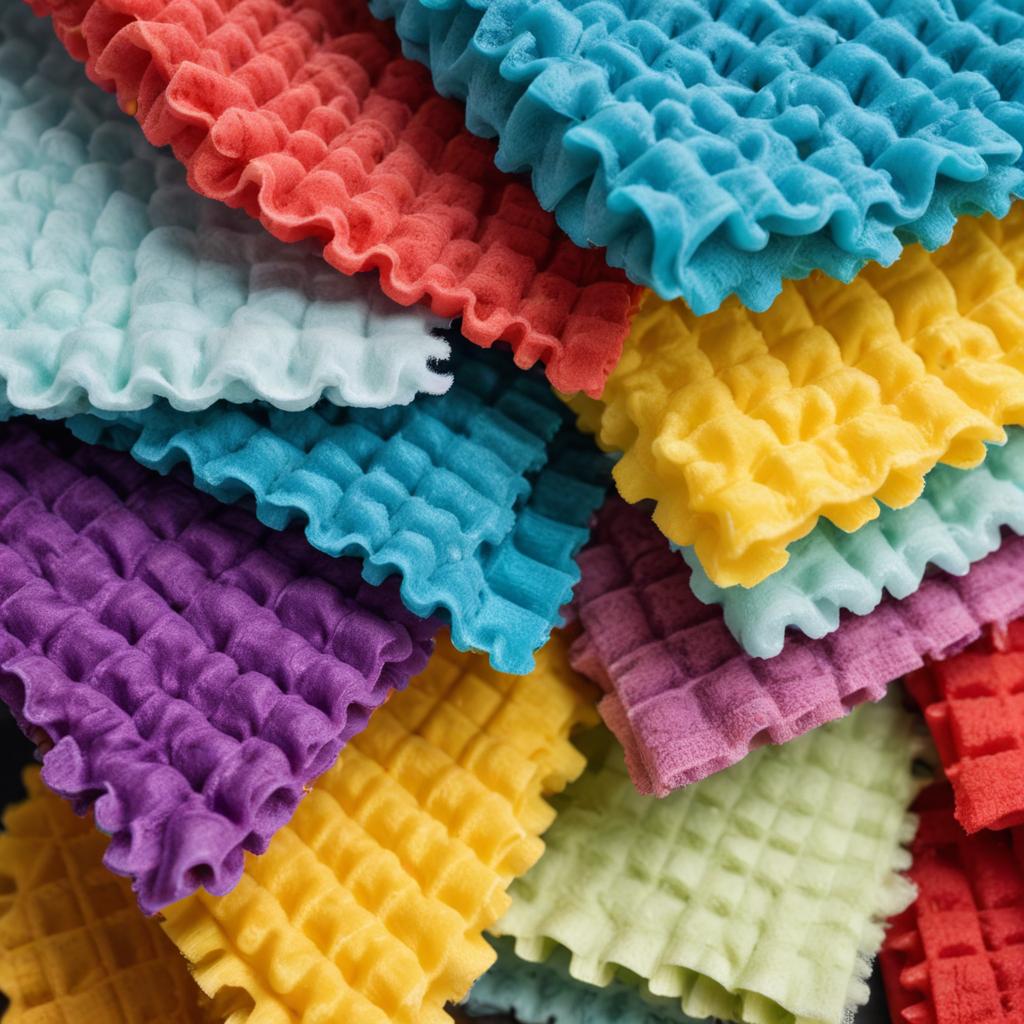
| Waffle Weave | 250–350 | Drying large panels, water spot removal | Wax or polish removal |
| Short Pile / Low Profile | 200–300 | Glass, windows, touchscreens, interiors | Paint contact (too thin) |
| Terry Weave | 300–400 | Interior cleaning, door jambs, engine bay | Paint contact (can scratch) |
| Edgeless | Any | Any paint-safe task | Nothing—edgeless is always safe |
Here’s a tip: keep a separate set of “dirty job” cloths for wheels, tires, engine bays, and exhaust tips. These cloths will pick up grease and metal particles that should never touch your paint .
How Many Cloths Do You Really Need?
For a basic car cleaning kit, start with 12–24 cloths. That sounds like a lot, but here’s how they break down.
- 4–6 plush cloths (350+ GSM) for paint contact, waxing, and drying touch-ups.
- 4–6 all-purpose cloths (250–350 GSM) for interiors, glass, and general wiping.
- 4–6 “dirty” cloths for wheels, tires, engine bay, exhaust tips, and door jambs.
- 2–4 large waffle weave towels for drying (if you don’t have a dedicated drying towel).
The Kirkland 36-pack covers all of this for $20. That’s why it’s so popular.
FAQ: Microfiber Cloth Questions Answered
What is the best microfiber cloth for car paint?
The Rag Company Edgeless 365 or Kirkland Signature Ultra Plush—both have ideal GSM and blend ratios for safe paint contact.
How often should you replace microfiber cloths?
Replace when they feel rough, shed lint, or no longer absorb water properly. With good care, expect 300+ washes .
What tools are needed in a cleaning kit besides cloths?
Two buckets, a wash mitt, car soap, a wheel brush, and a drying towel. The cloths handle detailing, buffing, and interiors .
Are expensive microfiber cloths worth the money?
For daily drivers, no—Kirkland and Grant’s work great. For show cars or frequent detailing, yes—premium brands like The Rag Company last longer.
Can I use DIY cleaning solutions with microfiber cloths?
Yes, but avoid vinegar and bleach. Use pH-neutral cleaners to preserve the fibers .
What mistakes should I avoid with microfiber cloths?
Using fabric softener, washing with hot water, mixing with other laundry, and reusing dropped cloths on paint.
Is there a difference between “car” microfiber and regular microfiber?
Often no—it’s marketing. Check the GSM and blend ratio regardless of what the package says .
The Bottom Line
Here’s the honest truth. You don’t need to spend $100 on fancy cloths to get a swirl-free shine. The Kirkland 36-pack from Costco ($20) or Grant’s 12-pack from Harbor Freight ($10) will serve 90% of car owners perfectly well. Spend the money you save on a good wash mitt and quality car soap.
But don’t use old t-shirts. Don’t use paper towels. Don’t use that random blue rag from the kitchen drawer. Your car’s paint is too expensive to treat like a garage floor.
Buy a pack of good microfiber cloths today. Wash them right. Color-code them if you’re feeling fancy. And the next time you step back and see your reflection in that hood? You’ll know exactly why it worked.
What’s your go-to cleaning method or tool? Share your experience in the comments below.
References:
- Yahoo Autos – 4 Cheap, Yet High-Quality Microfiber Towels For Your Car
- Alibaba – Best Cloth To Wash Car: Care, Clean, And Shine Without Scratches
- Mcrofbre – Mitt or Cloth? Choosing the Right Microfibre Cleaning Tool
- Wipestar – Which Cloth Is Best for Car Cleaning? Fiber Selection & Paint Protection
- Auto Stop – Top 5 Plush Microfiber Cloths for Cars
- Turtle Wax – Ultimate Clean & Shine Microfibre Cloth