The Ultimate Car Cleaning Kit Guide: Everything You Need for a Showroom Finish at Home
That first splash of soapy water across a dusty hood — and watching grime run off in sheets — is one of the most genuinely satisfying things you can do on a Saturday morning.
Most people figure car washing is just a bucket and a sponge. Then they end up with swirl marks on a dark-colored paint job, water spots on windows that won’t budge, and a dashboard that looks worse than before they started. The difference between that frustrating outcome and an actual showroom finish comes down almost entirely to having the right kit — and knowing how each tool gets used.
This guide covers exactly that. Whether you’re a first-time car owner, a busy parent fitting detailing in on weekends, or someone who just got tired of $40 car wash fees every other week, you’ll find everything you need here to build a complete car cleaning kit at home.
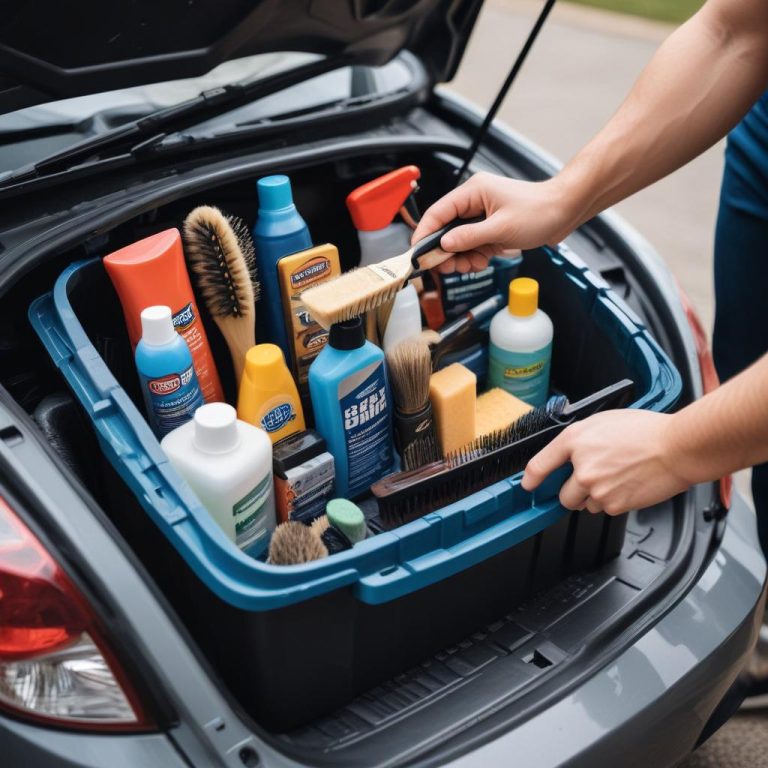
A proper car cleaning kit combines the right wash tools, interior cleaners, detailing accessories, and protection products. When you match each tool to its job — microfiber cloths for paint, foam applicators for wax, dedicated brushes for wheels and vents — you get cleaner results in less time, without damaging your car’s surfaces. This guide breaks down every essential tool, compares top products, and shows you how to put together a complete home detailing setup for any budget.
Key Takeaways
- A two-bucket wash method paired with a quality Microfiber Wash Mitt prevents swirl marks on paint.
- pH-Balanced Car Shampoos clean effectively without stripping existing wax or sealant coatings.
- Interior detailing requires at least three separate tools: a dedicated brush, a Vacuum Cleaner, and an interior-safe cleaner.
- Glass Cleaners formulated for automotive use give streak-free results that household glass sprays often don’t.
- Wheel brushes and Iron Fallout Removers handle brake dust far more effectively than general-purpose cleaners.
- A ceramic spray or paste wax adds a protective layer that makes every future wash faster and easier.
- Building your kit in stages — starting with wash essentials — is smarter than buying a cheap all-in-one bundle.
Understanding Your Car Cleaning Kit: What Every Component Actually Does
Walk into any auto parts store and the cleaning aisle looks overwhelming. There are dozens of shampoos, sprays, pads, brushes, and gadgets — many of which do similar things. The trick is understanding what category each product belongs to, and why you need it.
Professional detailers organize their process into four phases: wash, decontaminate, protect, and maintain. A solid home kit follows the same logic. You don’t need to buy everything at once, but you do need at least one reliable tool from each category to get real results.
The Exterior Wash Arsenal: Where It All Starts
The most common mistake in car washing is using a single dirty sponge and one bucket of water. That method grinds grit particles across your paint, creating the fine scratches — called swirl marks — that dull a finish over time. A proper exterior wash setup prevents this entirely.
Here’s what a solid wash kit needs:
- Two wash buckets with grit guards — one for soapy water, one for rinsing the mitt between passes.
- Microfiber Wash Mitt — holds more soap than a sponge, releases dirt safely away from paint.
- pH-Balanced Car Shampoo — strips dirt without attacking wax or clear coat.
- Wheel Brush — reaches behind spokes and around lug nuts where brake dust collects.
- Drying Towel or Waffle-Weave Microfiber — absorbs water without leaving lint or scratching the surface.
A rinse-less or waterless wash concentrate like Optimum No Rinse is worth having as a backup for quick maintenance washes or apartment situations with no hose access.
If the two-bucket method seems like overkill for a simple car wash — ask yourself how much you’d spend to fix a paint correction job caused by years of swirl marks.
Interior Cleaning Tools: The Half of the Job Most People Rush
Interior detailing gets skipped or half-finished more than any other part of car cleaning. It’s not glamorous — but it’s what you spend every minute of every drive noticing. A grimy steering wheel, dusty vents, and crumb-filled seat creases make a polished exterior feel pointless.
A complete interior kit includes:
- Handheld Vacuum Cleaner with crevice and brush attachments for seats, floor mats, and door pockets.
- Detailing Brush Set — small, stiff brushes to clean air vents, dashboard buttons, and seat seams.
- All-Purpose Cleaner (APC) — diluted correctly, a good APC handles plastic, vinyl, and fabric surfaces.
- Microfiber Cloths (dedicated interior ones, never shared with exterior) for wiping surfaces without leaving lint.
- Automotive Glass Cleaner for windows and the inside of the windshield — ammonia-free formulas are safer for tinted glass.
- Odor Eliminator or Fabric Refresher for seats and carpets, especially useful in vehicles driven by pets or kids.
“The interior is where you live when you drive. Treat it like you’d treat your living room — not an afterthought.” — Car Care Council, Detailing Best Practices Guide
When did you last clean the inside of your windshield — and what difference did you notice in nighttime glare afterward?
Protection and Finishing Products: Locking In the Results
Cleaning removes dirt. Protection stops dirt from bonding as easily the next time. Skipping this step means every wash starts from scratch against the same level of contamination. That’s where waxes, sealants, and ceramic sprays come in.
Paste Wax — traditional carnauba wax gives a warm, deep gloss. Takes more effort to apply, but the visual result on dark paint is outstanding. Products like Meguiar’s Gold Class paste wax sell for around $18–$22 at Walmart and Amazon.
Spray Sealant — synthetic polymer-based protection applied after washing. Much faster than paste wax. Brands like Chemical Guys Jet Seal or Turtle Wax Hybrid Solutions offer solid durability for under $25 at Auto Zone and Amazon.
Ceramic Spray Coatings — newer category, originally used only by professionals. Consumer-grade sprays like Turtle Wax Ceramic Spray or Meguiar’s Hybrid Ceramic Wax sell for $15–$30 at Walmart and Target and dramatically extend water-beading performance between full washes.
Ceramic and sealant products hydrophobic properties — they cause water to bead and sheet off — which means less water spotting and easier maintenance washes going forward.
If you could cut your weekly wash time by 40% just by applying one coat of ceramic spray monthly — would you still skip the protection step?
How Car Cleaning Tools Evolved: A Brief History
Manual Cleaning vs. Machine-Assisted Tools: Which One Gets Better Results?
This is one of those debates that comes up constantly in detailing communities. The answer, honestly, depends on what you’re trying to accomplish.
Hand washing gives you more control. You feel every surface, catch issues early, and you can clean around trim, mirrors, and badges without worrying about mechanical damage. For regular maintenance washes — once every two weeks or so — hand washing is perfectly sufficient and actually recommended for painted surfaces.
Foam Cannons attached to pressure washers pre-soak the vehicle in thick foam, which dwell time on the surface and loosens heavy grime before you touch the paint. They don’t replace hand washing, but they make it significantly faster and safer. Entry-level foam cannons run $25–$55 at Amazon and Home Depot, and they fit most consumer pressure washers.
Dual-Action Orbital Polishers are where machine tools genuinely outperform hands. Removing swirl marks, water etching, or oxidation by hand with a polishing compound requires enormous effort and inconsistent results. A good DA polisher — the DEWALT DWP849X sells for around $140 at Home Depot; the more affordable Avid Power at $60–$75 on Amazon — does in 20 minutes what hand polishing might take two hours to achieve.
Machine polishing is not for beginners to start with. Build your wash and protection routine first, then move to polishing once you understand the process.
Comparison: Top Car Cleaning Tools at a Glance
| Product Type | Best For | Ease of Use | Key Feature | Price Range |
|---|---|---|---|---|
| Meguiar’s Gold Class Shampoo | Regular exterior wash, wax-safe formula | Very Easy | pH-balanced, high-suds, conditioners protect paint | $10–$16 (Amazon, Walmart) |
| Chemical Guys MIC_506_03 Microfiber Towels | Drying, buffing, interior wiping | Very Easy | Ultra-soft 470 GSM weave, color-coded for use zones | $22–$28 (3-pack, Amazon) |
| Adam’s Wheel Brush | Wheel face, barrel, lug nuts | Easy | Soft flagged bristles, safe for polished alloy and chrome | $16–$24 (Amazon) |
| Turtle Wax Hybrid Ceramic Spray | Quick post-wash protection | Very Easy | Graphene-enhanced, 12-month claim, deep gloss | $14–$20 (Walmart, Target) |
| Black+Decker HHVK515J00 Cordless Handheld Vac | Interior seats, floor mats, crumbs | Easy | Lightweight, 15.6V, crevice and brush attachments included | $45–$60 (Home Depot, Amazon) |
| Stoner Invisible Glass Cleaner | Interior and exterior glass, windshields | Very Easy | Ammonia-free, streak-free, tint-safe formula | $8–$13 (Amazon, Walmart) |
Looking at that list — how many of these do you already own, and which one would make the biggest difference in your current routine?
Car Cleaning Kit: Tool Importance by Detailing Phase
Weighted usefulness score (1–10) across four common home detailing scenarios
Building Your Kit on a Budget: Three Tiers That Actually Work
You don’t need to spend $300 to detail your own car well. Here’s how to stage the investment based on where you’re starting from.
Tier 1 — The Essentials ($40–$65)
This covers a basic wash kit that prevents the most common damage. You get: a quality car shampoo, two buckets, a microfiber wash mitt, three microfiber drying towels, a wheel brush, and an interior spray cleaner. This setup handles a full exterior and interior detail — just not paint correction or deep protection.
Tier 2 — The Complete Kit ($90–$140)
Add a ceramic spray sealant, an automotive glass cleaner, a detailing brush set for interior vents and trim, an Iron Fallout Remover for wheel decontamination, a foam cannon (if you have a pressure washer), and a proper storage bag or bucket organizer. At this level you can do a professional-quality detail from start to finish.
Tier 3 — The Enthusiast Setup ($180–$280)
This tier adds a dual-action orbital polisher with a set of foam correction and finishing pads, a clay bar kit for paint decontamination, a paint depth gauge (optional but useful), and professional-grade products from brands like Gtechniq, Koch-Chemie, or CarPro. This is the setup that genuinely competes with a $200 professional detail.
Even Tier 1 tools, used consistently and correctly, will keep a car in significantly better condition than irregular professional washes with poor-quality equipment.
Frequently Asked Questions
Your Turn
What’s your go-to cleaning method or tool? Did this guide change what you’ll reach for next wash day? Share your experience in the comments below — and let other readers know what actually works in your garage.