How to Store Your Car Cleaning Kit Properly | Prevent Damage, Save Money, and Keep Products Working
You finally organized your garage, hung up your hose, and neatly stacked your car cleaning supplies — only to come back three months later and find your spray bottles won’t spray, your microfiber towels smell like mildew, and your expensive wax has turned into a chunky, separated mess.
That’s a terrible feeling. You didn’t use the products up. You just stored them wrong. The good news? Proper storage is incredibly simple once you know the rules. A few small changes to where and how you keep your car cleaning kit can double the life of your tools and chemicals. Let’s fix this so your next wash day isn’t ruined by crusty brushes and dead sprayers.
TL;DR
Store your car cleaning kit in a cool, dry place between 50–80°F (10–27°C). Keep spray bottles upright, hang microfiber towels to dry completely before folding, and never let any product freeze or bake in direct sun. Remove batteries from electric tools like pressure washers and vacuums. Tighten all caps, rinse out foam cannons and sprayers, and keep everything off concrete floors. A simple plastic bin or rolling cart works great for most home garages or apartment closets.
Key Takeaways
- Store all car cleaning chemicals between 50–80°F to prevent freezing or separation.
- Hang microfiber towels to air dry fully before folding and sealing in bags.
- Keep spray bottles upright so the pickup tube stays submerged in liquid.
- Remove batteries from cordless tools and store them separately.
- Use a plastic storage bin with a lid to keep dust, pests, and moisture away.
Understanding Proper Storage: Why Your Garage Is Ruining Your Stuff
Here’s the thing about car cleaning products — they’re made of chemicals that react to temperature, light, and air. Your garage might seem like a fine place to stash everything. But if your garage gets hot in summer or freezing in winter, you’re slowly destroying your car cleaning kit. The same goes for a shed, an outdoor closet, or even the trunk of your car.
Interesting fact: Most liquid car cleaning products start to break down when stored above 90°F (32°C) for more than a few days. The heat causes chemical separation, and no amount of shaking will fix it.
Think about it. You wouldn’t leave milk in a hot car. You shouldn’t leave pH-balanced cleaners or glass cleaners there either. They might not spoil the same way milk does, but they become less effective. Some can even turn into watery, useless sludge.
So ask yourself: Where are you keeping your cleaning supplies right now? Is it a place you’d be comfortable leaving a chocolate bar? If not, move them.
What Happens When You Store Car Cleaning Products Wrong
Let me paint a picture. Freezing temperatures are the number one killer of liquid car care products. When all-purpose cleaners, degreasers, or car shampoos freeze, the water inside expands. That expansion can crack the bottle. Even if the bottle doesn’t crack, the ingredients can separate permanently. The product might look chunky or watery afterward.
Heat is almost as bad. High heat makes spray bottles build up pressure. Sometimes the seals fail and product leaks everywhere. Heat also evaporates the water and solvents in cleaners, leaving behind a thick, gooey mess that won’t spray.
Light, especially sunlight, breaks down the active ingredients in many eco-friendly cleaning solutions and non-toxic ingredients. That’s why so many car cleaning products come in opaque or dark-colored bottles. The manufacturer is trying to protect the product from UV damage.
Moisture and humidity cause metal parts to rust. Spray nozzles get stuck. Brush handles get moldy. Microfiber towels develop that sour, musty smell that never goes away even after washing.
Safety reminder: Never store cleaning products near a water heater, furnace, or any open flame. Some aerosols and solvents are flammable.
Have you ever opened a spray bottle and had it spray a weak, sad mist instead of a strong stream? That’s a sign the internal seals dried out from bad storage.
Timeline: How Car Cleaning Storage Has Evolved
The way people store car cleaning supplies has changed a lot over the decades. Our grandparents did things differently — and not always better.
Better storage methods and improved bottle designs have nearly quadrupled how long car cleaning products last. But only if you actually follow the rules.
The Perfect Storage Environment for Your Car Cleaning Kit
You don’t need a fancy climate-controlled garage. You just need a spot that checks a few boxes.
Temperature Range: Keep It Cool but Not Cold
The ideal temperature range for most car cleaning chemicals is 50–80°F (10–27°C). That’s basically room temperature. So think about where in your home or garage stays closest to that range all year.
Good options:
- A closet inside your house (heated in winter, air-conditioned in summer)
- A basement that doesn’t get damp or flood
- An attached garage that’s insulated (not perfect, but okay for most products)
- A laundry room cabinet away from the dryer’s heat
Bad options:
- An uninsulated shed
- A detached garage with no heating or cooling
- The trunk of your car
- Near a window that gets direct sun
- On a concrete garage floor (more on that later)
Interesting fact: Concrete floors can get much colder than the air temperature in your garage. A product sitting directly on concrete in winter might freeze even if the garage air is above freezing.
Have you ever pulled a bottle off your garage floor and found it was ice cold even though it wasn’t freezing outside? That’s the concrete doing its job as a thermal conductor.
Humidity and Moisture Control
Humidity is sneaky. High humidity makes labels peel off. It makes cardboard boxes sag. It can cause mold to grow on the inside of spray bottle caps. Low humidity (very dry air) can dry out rubber seals and O-rings inside sprayers.
Most garages are fine for humidity. But if your garage gets condensation on the walls or floor, that’s too humid. Run a small dehumidifier or move your car cleaning kit into the house.
Safety reminder: Never store cleaning products in a bathroom where shower steam can get into bottles. Moisture inside a chemical bottle can cause reactions or dilute the product unevenly.
Light Exposure: Keep It Dark
Sunlight is an enemy. UV rays break down many chemical compounds. That’s why so many car cleaning products come in dark bottles — the plastic itself blocks UV light. But if you transfer products to clear spray bottles, you’re exposing them to damage.
Keep your kit in a cabinet, a covered bin, or a dark corner. If you must store things on a shelf, face the labels away from windows.
Tip: If you buy products in clear bottles, wrap a piece of duct tape around the bottle or store it inside a paper bag. That cheap trick blocks UV light completely.
How to Store Different Types of Car Cleaning Products
Not everything in your car cleaning kit needs the same treatment. Let’s break it down by category.
Liquid Chemicals (Shampoos, Degreasers, Glass Cleaners, Dressings)
These are the most sensitive to temperature. Freezing and heat are both bad. But there’s another issue: evaporation. Many liquid cleaners have water or alcohol that can slowly evaporate through the bottle plastic if the cap isn’t tight.
How to store properly:
- Keep caps and spray nozzles tightly closed.
- Store bottles upright, not on their sides.
- Wipe any drips off the outside of the bottle before putting it away.
- Check every few months for leaks or thickened product.
Do you have a bottle of tire dressing that’s turned into a lumpy gel? That’s evaporation. The water left, but the solids didn’t.
Aerosol Sprays (Tire Shine, Interior Cleaners, Lubricants)
Aerosol cans are under pressure. Heat makes that pressure go up, which can cause leaks or, in extreme cases, bursting. Cold makes the pressure go down, which makes the spray weak and sputtery.
How to store properly:
- Keep away from any heat source (furnace, water heater, direct sun).
- Don’t store in a car trunk during summer.
- Store upright so the valve doesn’t get clogged.
- Never puncture or crush cans, even if they seem empty.
Safety reminder: Aerosol cans can explode if exposed to temperatures above 120°F (49°C). That’s lower than you think. A parked car in summer can easily hit 140°F inside.
Microfiber Cloths and Wash Mitts
These are the most neglected items in most people’s car cleaning kit. People wash them, fold them damp, and stuff them in a drawer. Then they wonder why the towels smell like old socks and don’t absorb water well.
How to store properly:
- After washing, hang microfiber towels to air dry completely.
- Once fully dry, fold loosely — don’t pack them tight.
- Store in a clean, dry bin or drawer.
- Keep them separate from cotton towels or rags.
- If a towel smells musty, rewash with a splash of white vinegar (no fabric softener).
Interesting fact: Microfiber can hold up to seven times its weight in water. If you store it wet, that water has nowhere to go, and bacteria grow fast.
Have you ever dried your car with a “clean” towel and noticed a funky smell afterward? That’s bacteria from improper drying and storage.
Brushes, Sponges, and Wash Mitts (The Wet Tools)
These are the hardest to store because they’re often still damp after use. If you throw a wet sponge into a closed bucket, you’ll find it moldy and disgusting within a week.
How to store properly:
- Rinse brushes and sponges thoroughly after every use.
- Squeeze out as much water as possible.
- Hang brushes with the bristles pointing down (use a hook or a clothes hanger).
- Store sponges on a drying rack or a wire shelf, not in a closed container.
- Once completely dry, you can put them in a bin — but leave the lid cracked for airflow.
Tip: Drill a few small holes in the bottom of your wash bucket. This lets water drain out and air circulate, so the bucket itself doesn’t get musty.
Do you store your wet wash mitt inside your bucket with the lid on? That’s a mold farm waiting to happen.
Pressure Washers, Vacuums, and Electric Tools
These are expensive. A little storage care goes a long way. The biggest killers are freezing water inside the pump (pressure washers) and leaving batteries on chargers too long (cordless vacuums).
How to store properly for pressure washers:
- After each use, disconnect the hose and spray gun.
- Run the pressure washer for 10 seconds with no hose attached to clear water from the pump.
- Store indoors or in a garage that doesn’t freeze.
- Coil the hose loosely — tight kinks damage the internal rubber.
How to store properly for vacuums:
- Empty the canister or change the bag before storage.
- Remove the filter and let it dry completely if it’s washable.
- Take out batteries if it’s cordless. Store batteries at about 50% charge in a cool place.
- Wrap the cord loosely around the handle, not tight.
Safety reminder: Never store a lithium-ion battery fully charged for months. It degrades faster. Store at 40–60% charge instead.
Have you ever pulled out your pressure washer in spring only to find it won’t build pressure? That’s almost always because water froze in the pump over winter and cracked something inside.
Storage Containers: What to Use and What to Avoid
You need something to hold all this stuff. A good storage container keeps dust out, protects against temperature swings, and makes it easy to grab what you need.
Best Options
| Container | Pros | Cons | Best For |
|---|---|---|---|
| Clear plastic bin with latching lid | See-through, stackable, cheap | Can crack in extreme cold | Most car cleaning kits |
| Rolling tool cart | Portable, organized, sturdy | Expensive, takes floor space | Serious enthusiasts |
| Wall-mounted cabinet | Saves floor space, looks clean | Installation required, limited size | Small garages |
| Heavy-duty tote (Rubbermaid, Husky) | Very durable, weather-resistant | Heavy, not see-through | Outdoor sheds |
| Hanging shoe organizer (over door) | Very cheap, great for spray bottles | Not sealed, dust gets in | Apartment dwellers |
What to Avoid
- Cardboard boxes: They absorb moisture, collapse, and attract pests.
- Garbage bags: No structure, hard to organize, easy to puncture.
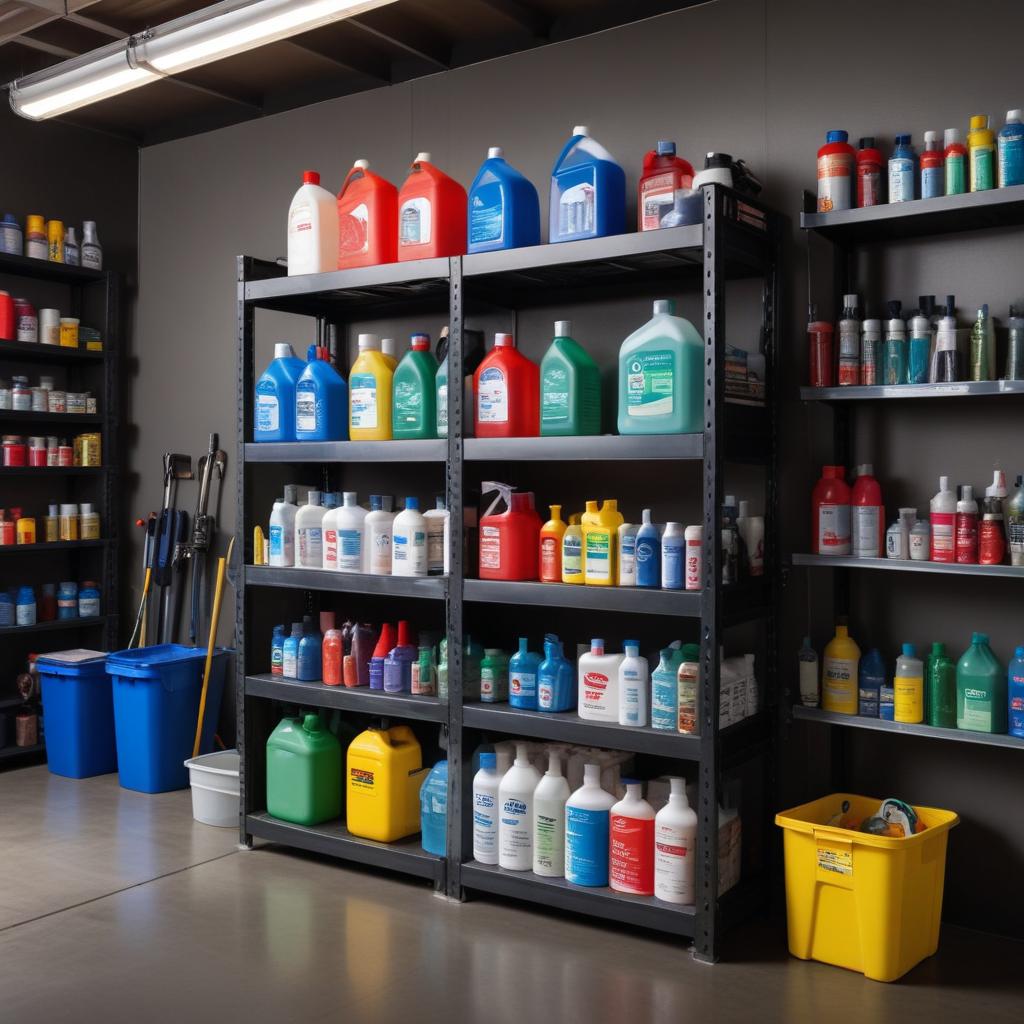
- Open wire shelves without bins: Dust and dirt settle on everything.
- Sealed metal ammo cans or similar: No airflow can trap moisture and cause rust on tools.
Interesting fact: Mice love nesting in cardboard boxes that smell like food or sweet-smelling car air fresheners. A plastic bin with a tight lid is mouse-proof.
Do you still have your car cleaning supplies in the cardboard shipping box they came in? That box is already breaking down, and it’s offering zero protection.
Storage Location Guide: Where Should You Put Your Car Cleaning Kit?
Let’s rank the most common storage spots from best to worst.
Best: Inside Your House (Closet, Laundry Room, Basement)
This is ideal. Temperature is stable. Humidity is controlled. No freezing, no baking. The only downside is that you might not want chemical smells near your clothes. Keep everything in a sealed bin, and it’s fine.
Good: Attached, Insulated Garage
Most attached garages stay between 50–80°F for most of the year. But if you live somewhere with extreme winters or summers, the garage can get too cold or too hot. Move your car cleaning kit into the house during the worst months.
Okay: Uninsulated Garage or Shed
This works if you only store tools (brushes, buckets, towels) and bring chemicals inside. Tools can handle temperature swings. Chemicals cannot.
Bad: Car Trunk
Don’t do this. Your trunk gets boiling hot in summer and freezing cold in winter. Plus, leaks can ruin your carpet. Only keep a tiny emergency kit there (glass cleaner, one microfiber) and swap it out seasonally.
Worst: Outside Under a Tarp or Leaning Against the House
Just no. Moisture, bugs, temperature swings, and animals will destroy everything.
Tip: If you have no indoor space, buy a small insulated cooler (like a lunchbox cooler) and store your most sensitive chemicals inside it. The insulation helps smooth out temperature swings.
Have you ever left a bottle of car shampoo in your trunk during a summer heatwave and found it had turned into watery slime? That’s permanent damage.
Seasonal Storage: Adjusting for Winter and Summer
Some people live in mild climates and don’t have to think about this. For the rest of us, seasons matter.
Winter Storage (Freezing Temps)
This is critical. One hard freeze can ruin your entire car cleaning kit. Here’s your winter checklist:
- Bring every liquid product inside your house. Every single bottle.
- Drain your pressure washer completely. Run it with no hoses attached for 10 seconds.
- Remove batteries from cordless tools and store them inside.
- Bring microfiber towels inside if your garage gets below 40°F (they won’t freeze, but cold towels don’t absorb water well).
- If you must leave brushes in the garage, hang them so they don’t sit on cold concrete.
Safety reminder: If a frozen bottle has expanded and looks bulging, don’t try to open it. Let it thaw slowly at room temperature for 24 hours first. The pressure inside could cause it to spray everywhere.
Summer Storage (Extreme Heat)
Heat is less immediately destructive than freezing, but it still does damage over time.
- Move products out of garages that get above 85°F.
- Keep everything out of direct sunlight.
- Check aerosol cans for bulging ends — that’s a sign of too much pressure.
- Store waxes and polishes in the coolest part of your house (maybe even the fridge for paste waxes — yes, really).
Interesting fact: Some professional detailers store their paste waxes in the refrigerator. The cool temperature keeps the wax from softening or separating.
Do you have a garage that turns into an oven in July? Your car cleaning products are cooking in there right now.
Common Storage Mistakes and How to Fix Them
Let me save you from the most common errors I see.
Mistake #1: Storing Spray Bottles on Their Sides
When a spray bottle lies on its side, the pickup tube isn’t submerged in liquid. The remaining air in the bottle can dry out the tube and the nozzle mechanism. When you finally use it again, it won’t spray.
Fix: Store all spray bottles upright. If you have to lay them down for transport, stand them up as soon as you get home.
Mistake #2: Leaving Caps Loose
Loose caps let air in and moisture out. Evaporation thickens products. Air exposure can oxidize some ingredients, changing their color and effectiveness.
Fix: After every use, tighten the cap until you feel resistance. Don’t overtighten (you can crack the cap), but make it snug.
Mistake #3: Storing Wet Microfiber in a Sealed Bag
People buy those cute zippered microfiber storage bags. Then they toss in a damp towel after a wash. A week later, the towel smells like a swamp.
Fix: Only store microfiber that is 100% dry. If you want to keep a bag in your car for emergencies, put dry towels in it and replace them every few weeks.
Mistake #4: Putting Everything in One Giant Bin
You have to dig through ten bottles to find the glass cleaner. You knock over the tire dressing. Something leaks and ruins everything.
Fix: Use smaller bins or dividers. Separate chemicals by type: exterior wash, interior cleaning, wheel and tire, glass, and tools. Label the bins with a marker.
Mistake #5: Storing Products on Concrete Floor
Concrete is cold in winter and can wick moisture up from the ground. Products sitting directly on concrete freeze faster and can develop condensation on the bottles.
Fix: Put a piece of plywood, a rubber mat, or even a scrap of carpet under your storage bin. Or put the bin on a shelf.
Have you ever noticed that cardboard boxes on a concrete floor feel damp even when the air is dry? That’s moisture moving through the concrete.
Comparison Table: Storage Containers for Car Cleaning Kits
Real prices from Amazon, Home Depot, Walmart, and Target as of April 2025.
| Container | Size | Price Range | Best Feature | Durability |
|---|---|---|---|---|
| Sterilite 20-Gallon Latching Box | 20 gal | $12–18 | Clear sides, stackable | Good |
| Husky Connect Rolling Tool Box | 22 in | $40–55 | Wheels, telescoping handle | Excellent |
| IRIS Weathertight Tote | 19 gal | $25–35 | Rubber gasket seal, clips | Very Good |
| Rubbermaid Roughneck Tote | 18 gal | $15–22 | Very common, easy to find | Good |
| Craftsman Versastack System | Modular | $50–100 | Stackable, customizable | Excellent |
| Simple Houseware Hanging Shoe Organizer | 24 pockets | $15–20 | Fits over door, cheap | Fair |
Expert Insight: What the Pros Say About Storage
“I’ve seen guys with ten thousand dollars worth of detailing products store everything in a shed that hits 110 degrees in summer. They wonder why their compounds are dry and their polishes separate. You don’t need a fancy setup — a plastic bin in a bedroom closet works perfectly. Keep it simple, keep it cool, keep it dry.” — Larry Kosilla, AMMO NYC
“Microfiber storage is the most overlooked thing in car care. I tell my students to hang their towels like shirts. Let them breathe. A folded, damp towel is a dead towel. Air circulation is free and it works better than any fancy storage bag.” — Yvan Lacroix, Optimum Polymer Technologies
Do you follow pro advice or just wing it? A few small changes make a huge difference.
FAQ: Storing Your Car Cleaning Kit Properly
What temperature should I store car cleaning products at?
Between 50–80°F (10–27°C). Avoid freezing and extreme heat above 90°F.
Can I leave car shampoo in my garage during winter?
No. Freezing ruins most liquid cleaners. Bring them inside before the first freeze.
How should I store microfiber towels long-term?
Wash, dry completely, then fold loosely in a clean, dry bin with a lid that breathes slightly.
Is it safe to store cleaning products in my car trunk?
Only for short periods. Trunk temperatures swing too much for long-term storage.
What’s the best container for a car cleaning kit?
A clear plastic latching bin from Sterilite or IRIS. See-through, stackable, and cheap.
How often should I check stored products for leaks?
Every 2–3 months. Rotate bottles and check caps for tightness.
Can I store different chemicals together in the same bin?
Yes, as long as caps are tight and nothing is leaking. Keep aerosols separate from liquids if possible.
Build Your Storage Setup in One Afternoon
You don’t need to spend a lot of money or time. Here’s a one-afternoon plan:
- Gather everything from your car cleaning kit in one place. Throw away anything that’s separated, chunky, or smells weird.
- Buy one or two clear plastic bins with latching lids. Get the size that fits your shelf or closet space.
- Wash and fully dry all microfiber towels, mitts, and brushes.
- Check every bottle cap and spray nozzle. Tighten anything loose. Wipe down sticky bottles.
- Organize by category — paint care, wheels, interior, glass, tools. Use smaller bins inside the big bin if you want.
- Place the bin in a closet, laundry room, or basement corner. Not the garage if it freezes or bakes.
- Set a calendar reminder for every season change to check for leaks and move products if needed.
That’s it. Two hours of work. Your products will last twice as long. Your towels won’t smell. Your spray bottles will actually spray. And your next wash day will feel easy instead of frustrating.
Interesting fact: A well-stored car cleaning kit can last 2–3 years without any product going bad. A poorly stored kit might need replacing every 6 months. That’s $50–100 saved per year just by moving a bin inside.
What’s your go-to cleaning method or tool? Share your experience in the comments below.
References: