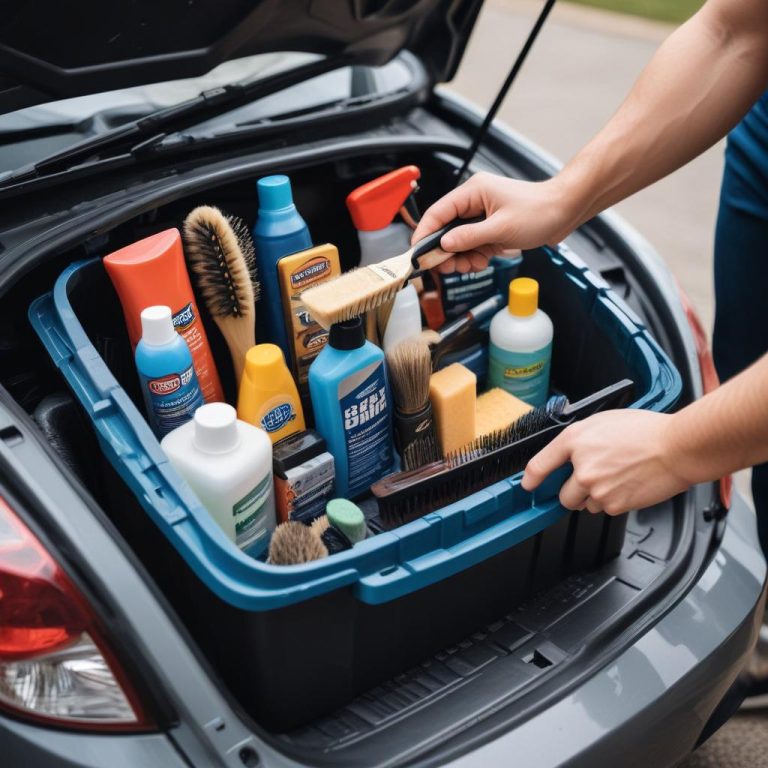

Best Car Cleaning Kit for SUVs and Trucks | Tackle Heavy-Duty Dirt and Save Hours of Scrubbing
You finally have a free Saturday, so you grab your old car cleaning kit and head outside to wash your truck — only to realize halfway through that your tiny sponge can’t cover the massive hood, your weak soap isn’t touching the caked-on mud, and you don’t have nearly enough microfiber towels to dry this beast.
That’s a frustrating feeling. SUVs and trucks aren’t small cars. They have way more surface area, bigger wheels that collect more brake dust, taller roofs that need reaching, and interiors that see more dirt, mud, and kid chaos. A basic sedan cleaning kit just won’t cut it. You need something built for heavy-duty work.
TL;DR
The best car cleaning kit for SUVs and trucks includes larger microfiber towels, a long-handled brush for roofs and windshields, heavy-duty wheel cleaner for bigger brake dust buildup, and concentrated soap that dilutes to make more volume. Look for kits with extendable reach tools, at least 4–6 large drying towels, and products specifically labeled for trucks or large vehicles. Professional-grade options like Zep T’N’T or Autoglym’s larger 2.5L formats save money over time. Expect to spend $50–120 for a quality truck-specific kit.
Key Takeaways
- SUVs and trucks need more product — look for concentrated soaps and larger bottle sizes.
- Extended reach tools (long brushes, telescoping wash mitts) save you from climbing on stools.
- Heavy-duty wheel and tire cleaners are essential because trucks produce more brake dust.
- You’ll need at least 4–6 large microfiber drying towels for a full-size SUV or truck.
- Professional-grade truck washes like Zep T’N’T are brushless and designed for large vehicles.
Understanding Why SUVs and Trucks Need a Different Cleaning Kit
Here’s the thing about cleaning a big vehicle — it’s not just a scaled-up version of washing a sedan. The challenges are different. Your SUV or truck has a taller profile, which means the roof gets dirty but is harder to reach. The wheels are larger and produce more brake dust because the vehicle is heavier. The front grille and bumper catch more bugs because you’re sitting higher and pushing air differently.
Interesting fact: A full-size pickup truck has about 60–70% more exterior surface area than a compact sedan. That means you need roughly double the amount of soap, water, and drying towels.
Think about it. When you wash a small car, one spray bottle of quick detailer might last for months. On a truck, you’ll go through that same bottle in two or three washes. One microfiber towel dries a sedan’s hood easily. On an SUV, that same towel is sopping wet before you finish the first panel.
So ask yourself: Have you been struggling with a standard kit because it’s just not enough for your big vehicle?
What Makes a Kit “SUV or Truck Ready”?
Not every cleaning kit on the shelf is built for large vehicles. Here’s what to look for:
Concentrated Formulas
Look for soaps and cleaners that say “concentrated” on the label. A 16-ounce bottle of concentrated car shampoo can make 4–5 gallons of wash solution. The same size bottle of ready-to-use soap might only make 1 gallon. For a truck, you need that dilution power.
Larger Bottle Sizes
Some brands now offer 2.5-liter or gallon-sized refills. Autoglym, for example, sells many of their popular products in 2.5L formats specifically for people who clean larger vehicles . Buying bigger saves money per ounce and means you run out less often.
Heavy-Duty Degreasers
Trucks and SUVs work harder. They tow, haul, drive on dirt roads, and carry muddy gear. Standard car soap won’t touch road film, exhaust deposits, or caked-on grime. Products like Zep T’N’T Truck and Trailer Wash are specifically formulated to remove tough road grime without scrubbing .
Longer Reach Tools
A standard wash mitt on your hand won’t reach the middle of an SUV roof unless you’re very tall. Kits with extendable handles or telescoping brushes are worth the extra money.
Do you own a step stool just to wash your roof? That’s a sign you need a kit with better reach tools.
Timeline: How Truck Cleaning Has Evolved
Truck owners used to rely on harsh, paint-damaging cleaners. Things have changed a lot.
The market for truck-specific cleaning products has exploded. Today, you have more choices than ever — which means you can find exactly what your vehicle needs.
Professional-Grade Options: When Consumer Kits Aren’t Enough
Sometimes, a regular consumer kit just won’t do the job. If you drive a heavy-duty truck, tow frequently, or live on a dirt road, you might need professional-grade products.
Zep T’N’T Truck and Trailer Wash
Zep is a trusted name in industrial cleaning. Their T’N’T Truck and Trailer Wash is a professional-grade product designed for large vehicles . Here’s what makes it special:
- Brushless formula — you spray it on, let it dwell for 2–3 minutes, and rinse off. No scrubbing needed .
- Removes exhaust deposits — diesel trucks and heavy haulers get black soot on the back. This stuff eats through it.
- Works with pressure washers — dilute 1 part product to 25 parts water and apply with low or high pressure .
- Removes salt buildup — critical for trucks driven in winter conditions .
Safety reminder: Zep T’N’T is for industrial and business use. Test on an inconspicuous area first, and don’t let it dry on the surface. It’s not recommended for polished aluminum or magnesium wheels .
Spray Nine Heavy-Duty Cleaner/Degreaser
Another professional option is Spray Nine. This stuff is a heavy-duty cleaner that also disinfects and deodorizes . It’s great for:
- Tires and wheels with baked-on brake dust
- Interiors with stubborn stains
- Removing road film and tar
- Cleaning up after pets or muddy gear
The 4-liter jug size is perfect for truck owners who clean frequently .
Interesting fact: Spray Nine can also be used as a laundry pre-spotter for really tough grass or grease stains on your work clothes.
Have you ever tried a regular consumer cleaner on diesel exhaust soot and watched it do nothing? That’s when you know it’s time for professional-grade products.
Building Your Own SUV/Truck Cleaning Kit
You don’t have to buy a pre-made kit. Sometimes building your own is better because you can choose exactly what you need. Here’s what to include.
Exterior Essentials
Wash Mitt — Get a large, deep-pile microfiber mitt. The bigger the better. Some truck-specific mitts are designed to fit over your whole hand and forearm.
Long-Handled Brush — This is non-negotiable for SUVs and trucks. Look for one with a soft, scratch-free head and an extendable handle that reaches at least 36 inches.
Two Buckets — The two-bucket method (one for soap, one for rinsing) is even more important on large vehicles. You’ll generate more dirt, so you need clean rinse water.
Concentrated Car Shampoo — Look for pH-balanced formulas that say “high dilution ratio.” Some truck-specific soaps dilute at 1:400 or even 1:800.
Wheel and Tire Cleaner — Trucks have larger wheels with more surface area for brake dust. Get a dedicated wheel cleaner, not just all-purpose soap.
Spray Wax or Sealant — Drying a truck takes time. A spray wax that you apply while drying (wet application) saves a whole separate step.
Interior Must-Haves
Powerful Vacuum — The THINKWORK Car Cleaning Kit includes an 8000PA vacuum that’s strong enough for truck carpets and floor mats . Corded vacuums generally have more power than cordless for big jobs.
Detailing Brush Set — SUVs and trucks have more nooks, crannies, and vents. A 7-piece brush set helps you reach everything .
Cleaning Gel — PULIDIKI Car Cleaning Gel is perfect for getting dust out of air vents and tight dashboard spaces . It molds to any shape and picks up dirt that brushes just push around.
All-Purpose Interior Cleaner — Chemical Guys Total Interior Cleaner & Protectant works on leather, vinyl, plastic, and rubber — all the surfaces in a typical truck interior .
Microfiber Towels (Lots of Them) — For a full-size SUV or crew cab truck, you need at least 6–8 large microfiber towels. Drying takes more towels than you think.
Tip: Keep a separate set of “dirty” towels for wheels and tires. Never use your paint towels on wheels.
Do you have enough drying towels to finish your truck without wringing out a soaking wet towel? If not, buy more.
Comparison Table: Best Car Cleaning Kits for SUVs and Trucks
Real data from Amazon, Walmart, Home Depot, and manufacturer websites as of April 2025.
| Product Type | Best For | Ease of Use | Key Feature | Price Range |
|---|---|---|---|---|
| Armor All Premier Car Care Kit | Daily drivers, beginners | Very Easy | 8-piece complete kit, trusted brand | $25–35 (Walmart) |
| THINKWORK Car Vacuum Kit | Interior deep cleaning | Easy | 8000PA suction, 7-piece brush set | $45–60 (Amazon) |
| Chemical Guys Total Interior Kit | Interior protection | Easy | Cleaner and protectant in one | $30–45 (Amazon) |
| Zep T’N’T Truck & Trailer Wash | Heavy-duty exterior | Moderate | Brushless, removes exhaust deposits | $120–130 (5 gal bundle) |
| Autoglym 2.5L Professional | Frequent washers | Easy | Large format, concentrated | $25–50 per product |
| SnowPro TFR & Snow Foam | Pre-wash and deep clean | Moderate | pH neutral, works on chassis | $35–50 (Amazon UK) |
What About Pre-Made Kits?
Pre-made kits can be a great starting point, especially if you’re new to cleaning your SUV or truck. Here’s what’s out there.
Armor All Premier Car Care Kit
This 8-piece kit includes car wash, wax, glass cleaner, tire cleaner, and an air freshener . It’s a solid all-around option for someone who wants everything in one box. The downside? The bottles are standard size, so you’ll run out faster on a big truck. But for $25–35, it’s a good starting point.
Interesting fact: Armor All has been a trusted brand for multiple generations of car owners. Their products are reliable even in harsh sunny climates .
Building vs. Buying
Here’s my honest take. If you’re new to cleaning your truck, buy a pre-made kit. It’s less overwhelming and you’ll learn what you use most. After you run out of the first kit, build your own based on what you actually needed more of.
If you’ve been cleaning vehicles for years, build your own kit. You’ll save money and get exactly what you want.
Do you know which products you use the fastest? That’s your answer for whether to build or buy.
Heavy-Duty Products for Specific Truck Problems
Trucks face dirt that cars don’t. Here’s how to handle the tough stuff.
Road Film and Exhaust Deposits
Diesel trucks and vehicles that do a lot of highway driving get a dark, greasy film on the back. Regular soap won’t touch it. You need a traffic film remover (TFR).
SnowPro’s Traffic Film Remover is designed for exactly this . It breaks down oil, grease, road tar, and exhaust residue. Spray it on, let it dwell, and rinse. It’s pH neutral so it won’t damage paint.
Safety reminder: SnowPro’s TFR should not be used on galvanized metals or exposed aluminum — it may dull these surfaces .
Caked-On Mud
Mud is abrasive. If you scrub it off dry, you’ll scratch your paint. The trick is to soften it first. Use a pressure washer with a wide fan tip to blast off the big chunks. Then use a snow foam or pre-wash to loosen the rest before you ever touch the paint with a mitt.
Brake Dust on Large Wheels
Truck wheels get hotter and produce more brake dust than car wheels. That dust can bake onto the wheel surface if left too long. Use a dedicated wheel cleaner that changes color as it reacts with the iron particles in brake dust. These are often called “fallout removers” or “iron removers.”
Interesting fact: The purple color change you see with iron removers is the chemical reaction between the cleaner and the metal particles in brake dust. It’s actually working.
Have you ever tried to scrub baked-on brake dust off a truck wheel and given up after 20 minutes? That’s the sign you need a chemical iron remover, not more elbow grease.
Interior Cleaning for Trucks and SUVs
The inside of a truck or SUV takes more abuse than a car. More passengers, more cargo, more mud, more everything.
Carpet and Upholstery
CAR GUYS Super Cleaner is a versatile option that works on fabric, carpet, and upholstery . It comes with a microfiber towel and is safe for most interior surfaces. For heavy stains, you might need multiple applications.
Hard-to-Reach Areas
The Fitosy Car Interior Duster Detail Brush Cleaning Gel Kit combines soft putty for vents with detailing brushes for seams and buttons . The gel molds to whatever shape you need and lifts dust without scratching.
High-Touch Surfaces
The Armor All Multi Purpose Cleaner is a spray that works on dashboards, vinyl, plastic, and rubber . Keep a bottle in your kit for quick wipe-downs between deep cleans.
Interesting fact: The average truck steering wheel has more bacteria than a public toilet seat because truck drivers tend to eat more meals in their vehicles. Clean it weekly.
Do you eat in your truck? If yes, add weekly interior wipe-downs to your routine. Crumbs attract ants and mice.
Storage and Organization for Your Truck Kit
Your SUV or truck has more cargo space, so you can actually keep a decent cleaning kit in the vehicle. But be smart about it.
What to Keep in the Truck
- Small spray bottle of glass cleaner — for quick window touch-ups
- 2–3 microfiber towels — in a ziplock bag to keep clean
- Interior cleaning wipes — Armor All makes 30-count packs that are perfect
- Cleaning gel — for vent dust that builds up fast
What NOT to Keep in the Truck
- Full-size bottles of liquid — they can leak or freeze
- Aerosol cans — heat can make them burst
- Anything water-based in freezing weather — it will freeze and separate
Safety reminder: Never leave aerosol cans in a parked truck during summer. Interior temperatures can reach 140°F, which can cause cans to explode.
Tip: Use a small plastic crate or organizer bin to keep your in-truck kit tidy. Bungee cord it to a tie-down hook so it doesn’t roll around.
FAQ: Car Cleaning Kits for SUVs and Trucks
What size cleaning kit do I need for a full-size truck?
Look for concentrated products that make at least 5 gallons of wash solution. You’ll need 4–6 large drying towels.
Are truck-specific cleaning products worth the extra cost?
Yes. They’re more concentrated and designed for heavier dirt. You actually use less product per wash, so cost per use is similar or lower.
Can I use a regular car kit on my SUV?
You can, but you’ll run out of product faster and the tools may not reach the roof or clean large wheels effectively.
What’s the best way to clean a tall truck roof without a ladder?
Use an extendable wash brush with a soft microfiber head. Some extend to 50+ inches. Never stand on bumpers or running boards — it’s unsafe.
How often should I clean my truck’s undercarriage?
After every winter storm with road salt, or every 2–3 months if you drive on dirt. Use an undercarriage sprayer attachment for your pressure washer.
What’s the most important tool for truck cleaning that’s not in most kits?
A long-handled wheel brush. Truck wheels are deeper and have more spokes. A regular brush won’t reach the back of the barrel.
Are foam cannons worth it for trucks?
Absolutely. The thick foam clings to vertical panels longer than soap from a bucket, giving it more time to break down dirt on large surfaces.
Real-World Example: Two Truck Owners, Two Different Kits
Let’s look at two real scenarios.
Miguel drives a Toyota Tundra. He works in construction, so his truck sees dirt roads, mud, and job site dust every day. He parks outside. He uses a professional-grade kit with Zep T’N’T for the exterior and a THINKWORK vacuum for the interior. He washes weekly and goes through a lot of product, so he buys gallon-sized refills.
Jessica drives a Honda CR-V. She commutes on paved roads and parks in a garage. Her SUV gets dirty from normal driving and the occasional road trip. She uses the Armor All Premier Kit and washes every 2–3 weeks. The standard sizes last her months.
Same country, same type of vehicle category (SUV/light truck), totally different needs. That’s why one kit doesn’t fit all.
Interesting fact: A truck that gets washed every two weeks with proper products can maintain its resale value thousands of dollars higher than a neglected truck. Clean paint sells.
Final Thoughts: Build Your Kit Around Your Needs
You don’t need the most expensive professional kit if you drive a commuter SUV on paved roads. But you also shouldn’t struggle with a tiny sedan kit if you drive a heavy-duty truck through mud every weekend.
Look at your vehicle. Look at your driving habits. Look at your storage space. Then pick the products that match.
Start with the basics: concentrated soap, large microfiber towels, a long brush, and good wheel cleaner. Add specialty items as you learn what you need. And remember — the best kit is the one you actually use.
What’s your go-to cleaning method or tool? Share your experience in the comments below.
References: