Essential Tools Every Car Cleaning Kit Must Have | Don’t Waste Money on Stuff You’ll Never Use
You’ve seen those Instagram reels where someone sprays foam all over a car, scrubs for thirty seconds, and rinses to a perfect shine—and you know real life doesn’t work like that.
Here’s what actually happens. You buy a bunch of products that look cool, get home, and realize half of them do the same thing. Or worse, you forget one critical tool and end up using a bath towel that leaves lint all over your windshield. Frustrating, right?
I’ve been there. This post cuts through the marketing hype and tells you exactly which Essential Tools Every Car Cleaning Kit Must Have—and which ones you can safely ignore. No fluff, no sponsored recommendations, just real talk from someone who’s scrubbed more dirty cars than I care to admit.
TL;DR
Every effective car cleaning kit needs eight essential tools: two buckets, a microfiber wash mitt, car-specific soap, a large drying towel, a wheel brush, a pack of Microfiber Cloths (at least 12), a soft interior brush, and a glass cleaner. That’s it. Everything else—foam cannons, pressure washers, tire shine applicators, clay bars—are upgrades, not essentials. You can get a completely clean, swirl-free car with just these eight items for under $60.
Key Takeaways
- Eight tools form the core of any car cleaning kit. Everything else is optional.
- The two-bucket method prevents 80% of swirl marks—don’t skip it.
- Your wash mitt and drying towel are the two places to spend a little extra money.
- Sponges, dish soap, and old rags have no place in a modern car cleaning kit.
- Microfiber Cloths do multiple jobs: drying, interior, glass, and wax removal.
- A soft interior brush is often overlooked but makes a huge difference on carpets and vents.
- You don’t need a pressure washer or foam cannon to get professional results.
The Eight Non-Negotiable Tools
Let me be direct. You can buy fifty different cleaning products, but without these eight tools, you’re missing the foundation. With them, you can clean any car safely and effectively.
1. Two 5-Gallon Buckets
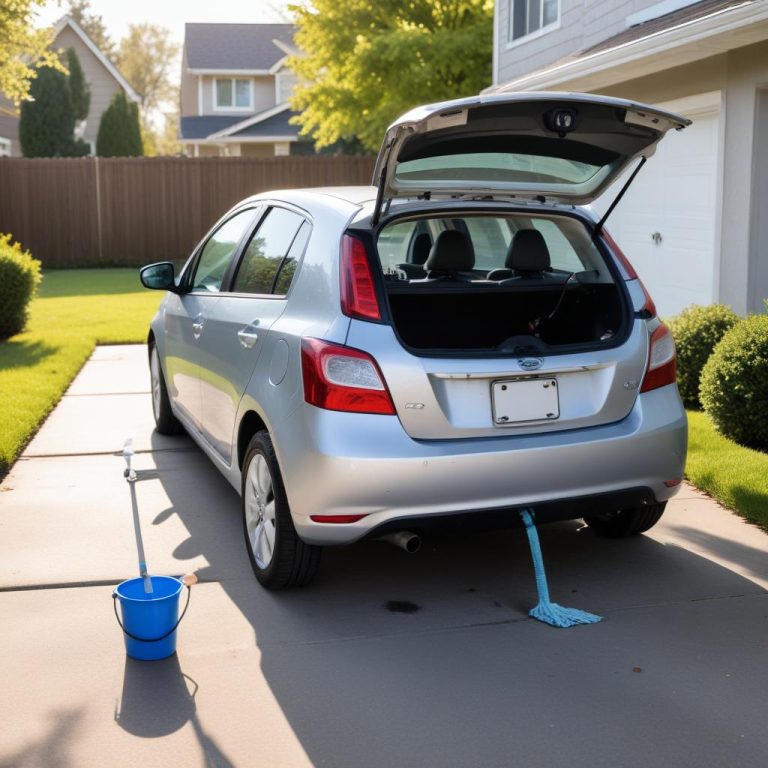
This might sound obvious, but the number matters. One bucket holds soapy water. The other holds plain rinse water. After every pass on the car, you dip your mitt in the rinse bucket first, then back into the soap.
Why two? Because a single bucket turns into dirty water almost immediately. You’re basically rubbing dirt back onto your paint with every dip. The two-bucket method keeps your soap clean and your mitt safe.
Here’s a tip: get white buckets so you can actually see when the rinse water turns dark. That tells you it’s time to change it.
A 5-gallon bucket from Home Depot or Lowe’s costs about $5. Two of them cost $10. That’s the best ten bucks you’ll spend on car cleaning.
Have you ever washed your car and noticed new scratches afterward? That’s usually dirty water or a dirty mitt. Two buckets fix most of that problem.
2. Microfiber Wash Mitt
Not a sponge. Not a cotton cloth. Not a brush. A microfiber wash mitt with deep, fluffy pile.
Sponges push dirt around. Cotton rags drag it. A good mitt traps dirt inside the fibers, away from your paint. When you rinse the mitt, that dirt washes out.
Look for a mitt with 300–400 GSM (grams per square meter) and a blend of 80% polyester and 20% polyamide. That’s the same spec as good microfiber cloths, but in mitt form.
Always test cleaning products on a small area before full use. Even a new mitt can have manufacturing residue—rinse it thoroughly before first use.
A decent mitt costs $8–12. Avoid the $3 mitts at discount stores. They’re thin and fall apart after one wash.
3. Car Wash Soap (pH-Balanced)
Here’s where beginners mess up the most. They use dish soap because it’s already under the sink. Big mistake.
Dish soap is designed to cut grease. It strips wax, dries out rubber seals, and can leave a film on paint. Car soap is pH-balanced, meaning it’s gentle on clear coat and wax.
Cleaning regularly helps prevent long-term damage and reduces effort over time. The right soap makes this easier.
Buy a 64-ounce bottle. It costs $9–12 and lasts 15–20 washes. Meguiar’s Gold Class and Turtle Wax Max Power are both excellent and widely available at Walmart, Target, and Amazon.
4. Large Drying Towel
Most people rush this step or skip it entirely. They let the car air-dry, then wonder why they have white spots everywhere. Those spots are mineral deposits. Once they etch into the paint, only polishing removes them.
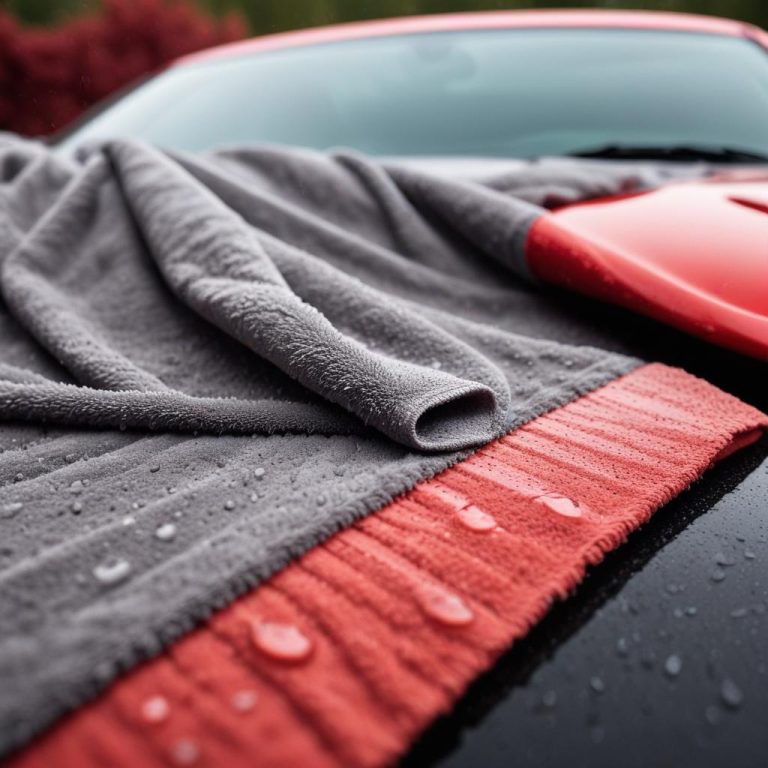
A proper drying towel is large (at least 24×36 inches), made of waffle-weave microfiber, and absorbs many times its weight in water. Lay it flat on a panel and pull toward you. No scrubbing.
Here’s a fact: a good drying towel can absorb 4–5 times its weight in water. A cheap one just pushes water around.
Expect to spend $10–15 for a quality drying towel. The Rag Company, Griot’s Garage, and even Kirkland (using two cloths together) all work well.
5. Wheel Brush
Wheels get filthy. Brake dust is sticky, metallic, and hard to remove. You need a dedicated brush with soft bristles and a long handle.
The long handle lets you reach between spokes to clean the barrel (the inside of the wheel). Soft bristles won’t scratch painted or clear-coated wheels.
Here’s a tip: clean your wheels first, before you wash the rest of the car. That way any splashed dirt gets rinsed away during your main wash.
A decent wheel brush costs $6–10 at Walmart, Target, or any auto parts store. Mothers and Quickie make good budget options.
6. Microfiber Cloths (At Least 12)
You can never have too many microfiber cloths. They’re the workhorses of your kit. But here’s the catch—you need different cloths for different jobs.
- Plush cloths (350+ GSM) – For paint contact, wax removal, and final buffing.
- Short-pile cloths (200–300 GSM) – For glass, touchscreens, and interiors.
- “Dirty” cloths – Old or cheap cloths for wheels, engine bay, and exhaust tips.
Color-code them. Use blue for paint, yellow for glass, green for interior, and gray for wheels. Or just write on them with a marker. The point is to never use a wheel cloth on paint.
A 12-pack of decent microfiber cloths costs $7–10 at Walmart. A 36-pack from Costco (Kirkland) costs about $20 and is widely considered the best value in car cleaning.
7. Soft Interior Brush
This tool gets overlooked constantly. People wipe down their dashboard and call it done. But carpets, floor mats, vents, and fabric seats need agitation to release dirt.
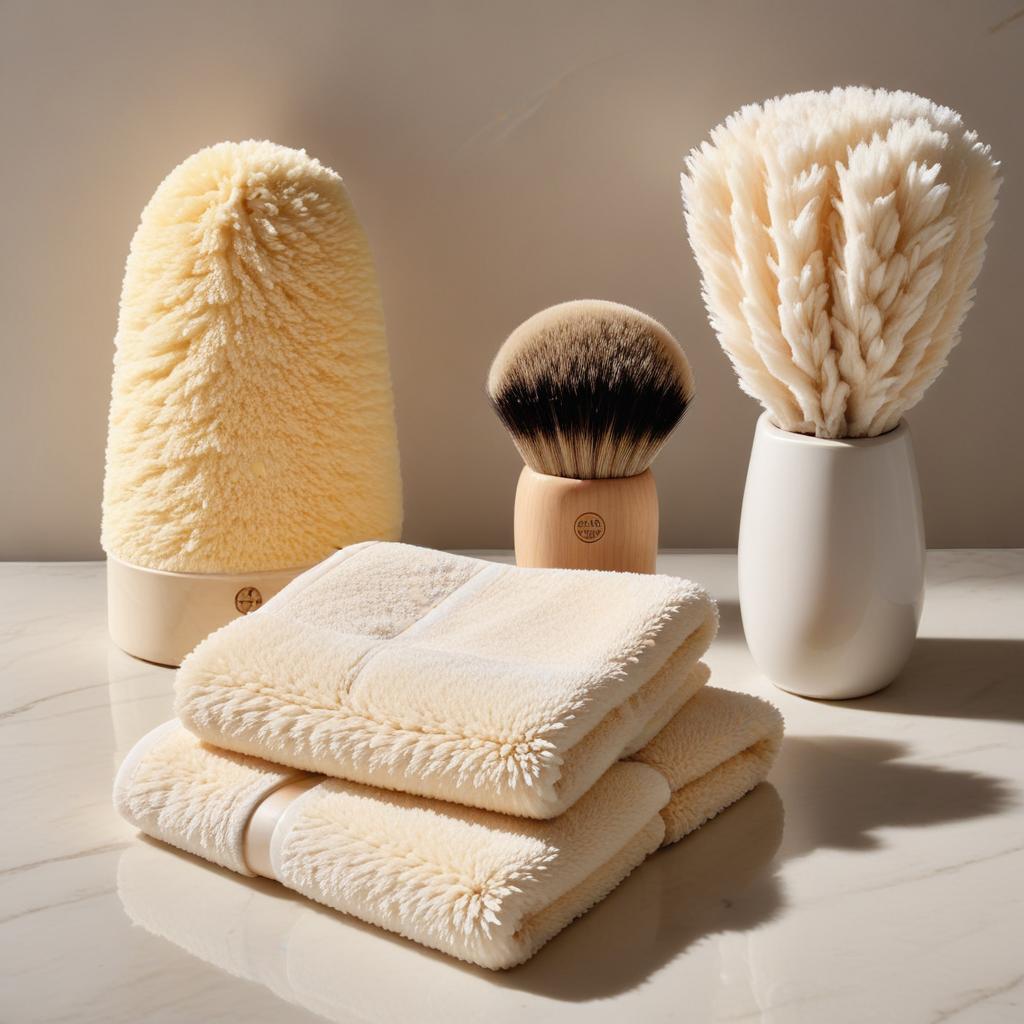
A soft-bristle brush (like a horsehair or boar’s hair brush) lifts dirt from fabric without damaging it. Use it on carpets before vacuuming. Use it on dashboard crevices. Use it on vents to dislodge dust.
Here’s a tip: a clean 2-inch paintbrush from the hardware store works perfectly and costs $3–4.
If you want something purpose-built, detail brush sets cost $8–12 and include multiple sizes. But a single soft brush is all you really need.
8. Glass Cleaner (Ammonia-Free)
Windows are the last thing you clean, but they’re the first thing people notice. Streak-free glass makes a dirty car look half-decent.
Buy ammonia-free glass cleaner if your windows are tinted. Ammonia can damage window tint over time. Invisible Glass is a reliable brand—about $5–6 a can.
Always test cleaning products on a small area before full use. Some glass cleaners leave a residue on tinted windows that looks like hazy streaks.
Spray the cleaner onto your microfiber cloth, not directly onto the glass. This prevents overspray from landing on your dashboard or paint. Use one cloth to wipe, and a second dry cloth to buff.
The Complete Tool Table
Here’s every essential tool in one place, with real prices from current retailers.
| Tool | Best For | Price Range | Where to Buy | Non-Negotiable Feature |
|---|---|---|---|---|
| Two 5-gallon buckets | Two-bucket wash method | $8–12 | Home Depot, Lowe’s | Must be 5 gallons, not smaller |
| Microfiber wash mitt | Paint contact washing | $8–15 | Walmart, Amazon, Target | 300+ GSM, deep pile |
| Car wash soap (64oz) | Lubrication and dirt lifting | $9–12 | Walmart, Target, Amazon | pH-balanced, no dish soap |
| Large drying towel | Water removal | $10–18 | Amazon, The Rag Company | Waffle weave or plush, 24×36 inch |
| Wheel brush | Brake dust and wheel grime | $6–10 | Walmart, Target, AutoZone | Long handle, soft bristles |
| Microfiber cloths (12+ pack) | Glass, interior, buffing | $7–20 | Costco, Walmart, Amazon | 80/20 blend, color-code for jobs |
| Soft interior brush | Carpet, vents, fabric seats | $4–8 | Hardware store, Amazon | Horsehair or boar’s hair |
| Glass cleaner | Streak-free windows | $5–9 | Walmart, Target, AutoZone | Ammonia-free for tinted windows |
Tools You Don’t Need (But Might Want Later)
Let me save you some money. These tools are nice to have, but they are not essential. Don’t buy them until you’ve used your basic kit at least five times.
Foam cannon – Looks cool on Instagram. Makes thick foam that smells like candy. But it doesn’t clean better than a bucket and mitt. It just uses more soap. Buy one later if you enjoy the process. $25–50.
Pressure washer – Speeds up rinsing. Makes foam cannons work. But a garden hose with a spray nozzle does the same job for $0 extra. $80–150.
Grit guards – Plastic inserts that sit in your bucket and trap dirt. They work, but you can get 90% of the benefit by just changing your rinse water when it looks dirty. $8–10 each.
Tire shine applicator – A foam block that applies tire dressing. Tire shine itself is optional. The applicator is optional for the optional product. $4–6.
Clay bar – Removes bonded contaminants (rough spots you can feel). Great for detailers. Overkill for a basic wash. Use one twice a year if you want. $15–20 for a kit.
Carpet extractor – A wet vacuum for deep cleaning stains. Expensive and bulky. Rent one or use a shop vac with upholstery attachment instead. $100–300.
Here’s a fact: professional detailers use pressure washers and foam cannons because they save time on multiple cars per day. For one car, once a week, you don’t need them.
Comparison: Essential Tools vs. Full Detailer Kit
Let me show you the difference between a basic essential kit and what a pro uses.
| Category | Essential Kit (8 tools) | Full Detailer Kit (20+ tools) | Is the Upgrade Worth It? |
|---|---|---|---|
| Wash method | Two buckets, mitt, soap | Pressure washer, foam cannon, two buckets, grit guards, multiple mitts | No for beginners |
| Drying | One large towel | Two large towels + leaf blower + drying aid spray | No |
| Wheels | Brush, microfiber, APC | Multiple brushes (barrel, spoke, tire), dedicated wheel soap, iron remover | Maybe for nice wheels |
| Interior | Soft brush, microfiber, APC | Steam cleaner, extractor, leather brushes, compressed air, 6+ detail brushes | No |
| Glass | Cleaner, two cloths | Glass-specific towels, reach tool, clay bar for glass | No |
| Protection | None (separate purchase) | Spray wax, paste wax, ceramic coating, sealant, quick detailer | Yes, but add slowly |
The essential kit does 85% of the work for 30% of the cost. Add tools one at a time based on what actually annoys you.
Real-World Test: One Month with Only the Essentials
I challenged a friend to clean his 2017 silver sedan for one month using only the eight essential tools. No pressure washer. No foam cannon. No fancy chemicals.
Week one: He was skeptical. “This feels too simple.” He followed the two-bucket method, used the mitt properly, dried with a large towel. Result: his wife asked if he’d paid for a detail.
Week two: He cleaned the wheels first this time. Noticed the whole car looked cleaner because no brake dust splashed onto the paint.
Week three: He added a $6 spray wax (not in the essential kit, but cheap). The car stayed cleaner longer between washes.
Week four: He admitted he’d wasted money on overpriced kits in the past. “I don’t need half the stuff I bought.”
His car had no new swirl marks. The paint looked glossy. And he spent less than $60 total.
“The difference between a clean car and a scratched car is almost never the soap or the wax. It’s the physical tools—the mitt, the towel, and the buckets.” — Consumer Reports Auto Detailing Guide
How to Use Your Eight Essential Tools (Quick Workflow)
You have the tools. Here’s how to use them in order.
Step 1: Wheels first. Spray wheels with water. Use wheel brush and diluted all-purpose cleaner. Scrub, rinse. Done.
Step 2: Set up two buckets. Fill one with water and car soap (read bottle for ratio). Fill second with plain water.
Step 3: Rinse the whole car. Hose from top to bottom.
Step 4: Wash top to bottom. Dip mitt in soap. Wash roof, then hood, then sides, then lower panels. After each section, rinse mitt in plain water bucket, then reload soap. Never put a dirty mitt back into soap bucket.
Step 5: Rinse the car. After every two sections, rinse with hose.
Step 6: Dry immediately. Use large drying towel. Lay flat and pull. Wring out towel as needed.
Step 7: Clean windows. Spray glass cleaner onto short-pile microfiber cloth. Wipe. Use dry cloth to buff.
Step 8: Interior quick-pass. Vacuum if you have one. Use soft brush on carpets and vents. Wipe dash with damp microfiber.
That’s it. Forty-five minutes. No fancy gear required.
Storing Your Essential Tools (So They Last)
These eight tools will last for years if you store them right.
- Buckets – Nest them together. Store upside down so dust doesn’t collect inside.
- Wash mitt – Rinse thoroughly, squeeze out water, hang to dry. Never leave it balled up wet.
- Drying towel – Wash separately with no fabric softener. Air dry or tumble on low.
- Microfiber cloths – Keep clean and dirty cloths in separate bags. Wash when you have 15–20 dirty ones.
- Wheel brush – Rinse and hang. Replace when bristles get bent or frayed.
- Soft brush – Tap out dust after each use. Wash with mild soap occasionally.
- Soap – Keep cap tight. Store away from freezing temperatures.
Here’s a tip: write the date on your wash mitt when you first use it. Replace it after 6–8 washes or when it starts to look matted.
FAQ: Essential Tools Questions Answered
What is the single most important tool in a car cleaning kit?
The microfiber wash mitt. It touches your paint more than anything else. Don’t cheap out here.
How often should you replace your wash mitt?
Every 6–8 washes, or immediately if it feels rough or looks matted.
What tools are needed for a basic wash vs a deep clean?
Basic wash needs buckets, mitt, soap, drying towel. Deep clean adds wheel brush, interior brush, glass cleaner, and microfiber cloths.
Can I use a regular household vacuum for car interiors?
Yes. Use the brush attachment to avoid scratching plastic trim.
Are expensive microfiber cloths better than cheap ones?
For paint contact, yes—spend $2–4 per cloth. For wheels and interiors, cheap ones are fine.
What mistakes should I avoid with essential tools?
Using one bucket, air-drying, using dish soap, and using the same cloth for wheels and paint.
Is a pressure washer ever necessary?
No. A garden hose works fine. Pressure washers save time but cost money.
The One Essential Tool People Always Forget
Let me tell you about the tool nobody thinks about until they need it.
A spray bottle for water.
That’s it. A simple $1 spray bottle from the dollar store. Fill it with plain water. Use it to pre-wet a bird dropping before wiping. Use it to rinse a spot where soap dried too fast. Use it to dampen a microfiber cloth for interior dusting.
It costs almost nothing and solves a dozen small problems. Add one to your kit today.
Building Your Kit on Any Budget
You can get the eight essential tools at three different price points.
Budget build ($45):
- Buckets: reuse any 5-gallon buckets you have (or buy two for $10)
- Wash mitt: $8 (Walmart basic)
- Soap: $9 (Turtle Wax 64oz)
- Drying towel: $10 (smaller waffle weave)
- Wheel brush: $6 (Target generic)
- Microfiber cloths: $7 (Walmart 12-pack)
- Soft brush: $4 (hardware store paintbrush)
- Glass cleaner: $5 (Invisible Glass)
Standard build ($75):
Upgrade the mitt to Meguiar’s ($12), drying towel to large waffle weave ($15), microfiber to Kirkland 36-pack ($20), and add two grit guards ($16).
Premium build ($120):
Upgrade everything to The Rag Company or Chemical Guys. Add a second drying towel, a wheel woolie, and a detail brush set.
Start with the budget build. It works. Upgrade later if you want.
The Bottom Line
Here’s what I need you to remember. You don’t need a garage full of products to get a clean car. You need eight tools, used correctly. That’s it.
The two buckets keep your mitt clean. The mitt keeps your paint safe. The soap lifts dirt without stripping wax. The drying towel prevents water spots. The wheel brush handles the dirty job. The microfiber cloths do everything else. The soft brush cleans what you can’t wipe. The glass cleaner makes it all look finished.
Eight tools. Under $60. No swirl marks. No frustration.
Now go check your garage. What are you missing? Grab it this weekend and give your car the wash it deserves.
What’s your go-to cleaning method or tool? Share your experience in the comments below.
References: